Wildfire
Wildfire as a business and supply chain risk
A wildfire is first and foremost an event for emergency services and residents. It becomes economically relevant only once it closes transport routes, affects the energy supply or personnel, or hits a region from which a business sources raw materials such as timber – regardless of whether the fire itself is nearby or far away.
Wildfires can become relevant for businesses when they affect transport routes, production sites, the energy supply or personnel. What matters is not the distance to the fire, but whether a traceable impact chain reaches the business or its supply chain.
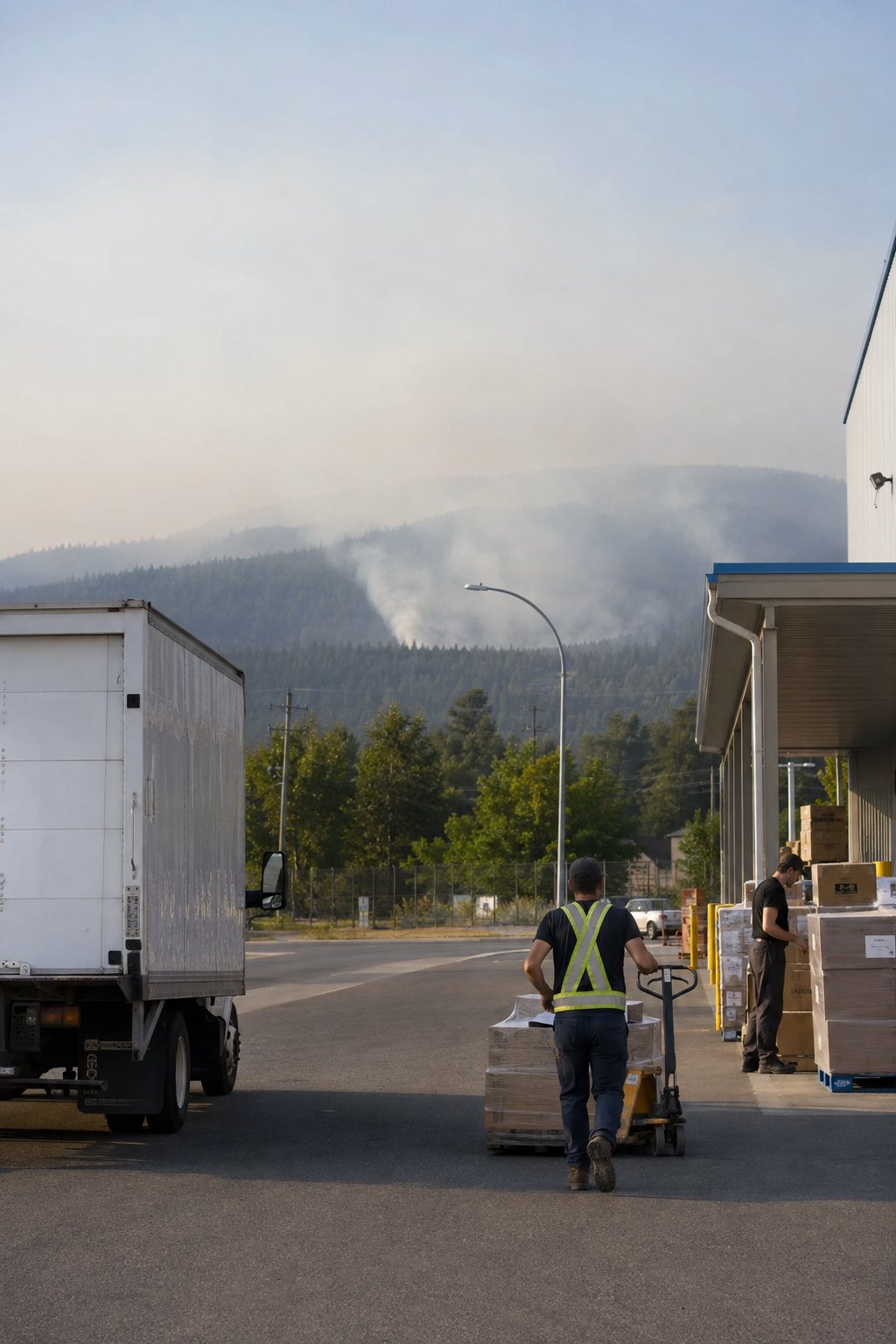
What matters for businesses in a wildfire?
It is not the fire itself that matters for a business, but its possible consequences for road, rail, the energy supply, production, personnel or supply. A wildfire can hit a region where a company produces, through which it transports goods, from which it sources personnel – or from which it sources raw materials such as timber, without the company's own site being affected at all. Whether an economic effect arises therefore depends on the actual supply route, not on geographic proximity to the fire.
Keep wildfire risks in view every day
SignalChain monitors relevant external developments daily and gets in touch as soon as something becomes relevant to your business.
What economic consequences can a wildfire have?
- road closures in the affected region and on alternative routes
- interrupted rail lines and rerouted freight traffic
- evacuations affecting personnel, sites or customers on the ground
- production stoppages at businesses within a closed-off zone
- power outages from damaged or pre-emptively shut-down lines
- smoke exposure triggering occupational safety rules for outdoor work
- emergency services tied up and unavailable elsewhere
How does the economic effect arise?
A typical sequence:
The closure, evacuation or disruption itself is documented; whether it affects a specific delivery or the business itself depends on its own supply route and is a possible, not a certain, consequence.
Which industries are particularly affected by wildfires?
What is affected is rarely an entire industry, but the specific link individual businesses have to the region: industry and logistics, when a plant or a used transit corridor lies within the closed-off zone; construction, joinery and timber processing, when raw timber is sourced from the affected region of origin; agriculture, when adjoining land is affected; energy suppliers, when overhead power lines run through forested areas; and trade, when demand collapses in an affected tourism region. What matters in every case is the actual link, not industry membership alone.
What early indicators are there?
- DWD fire danger index (WBI/GLFI)
- Official forecast of forest and grassland fire danger up to six days ahead, nationwide; capped at “medium” confidence as a forecast.
- EFFIS burned areas
- Mapped burned areas from the Copernicus Emergency Management Service, covering the whole EU.
- NASA FIRMS
- Supplementary satellite detection of active heat signatures, covering the whole world.
- Seasonal burn-area total
- Area burned since the start of the year by country of origin, as a comparison against previous years.
- Official closure notices
- Show whether a specific transport route or site is actually affected.
When does a wildfire actually matter for a business?
Only when a traceable impact chain reaches the business itself or its supply chain: a transport route it uses, its own or a supplying site in the region, personnel who live there, or raw material sourced from the affected region of origin. A wildfire without such a link usually has no economic consequence, regardless of how large the burned area is or how prominently it features in the news.
How does SignalChain help?
SignalChain monitors EFFIS burned areas and NASA FIRMS heat signatures daily and nationwide, supplemented by the DWD fire danger index as its own forecast value, and assesses whether a closure, evacuation or disruption affects a used corridor, site or supply route. The satellite-based sources cover Germany comprehensively because they do not require a dedicated measurement point at every location.
For official hazard and disaster warnings, the relevant authorities remain the definitive source; SignalChain does not provide advice for your individual situation.
Keep wildfire risks in view every day
SignalChain monitors relevant external developments daily and gets in touch as soon as something becomes relevant to your business.
Does SignalChain cover wildfire nationwide?
Yes. EFFIS and NASA FIRMS resolve nationwide without a site needing its own measurement point. The DWD fire danger index adds its own forecast value, also nationwide.
When does a wildfire become relevant for a business?
When it closes a transport route in use, affects personnel or sites in the region, or hits a region of origin for raw materials such as timber – not simply through its existence or size.
Which industries are particularly affected by wildfires?
Mainly industry and logistics with sites or corridors in the region, construction and timber processing via raw timber sourcing, and agriculture and energy suppliers with a direct link to the land.
How does this differ from an official wildfire warning?
Official warnings report the hazard situation itself. SignalChain additionally assesses whether a specific, used corridor or supply route could be affected.
Does SignalChain replace official warnings?
No. For official hazard and disaster warnings, the relevant authorities remain the definitive source.