Drought
Drought as a risk to harvests and agricultural goods
Drought is first and foremost a prolonged rainfall deficit. It becomes economically relevant when crop yields fall, raw-material prices for grain or oilseeds rise, or water for cooling and production processes grows scarcer – not simply because rain is absent on a single day.
Periods of drought can become relevant for businesses when they affect crop yields, raw-material prices, or the availability of water for production processes. What matters is not a single dry day, but whether a prolonged rainfall deficit is unusual for the season, and whether a traceable impact chain reaches the business.
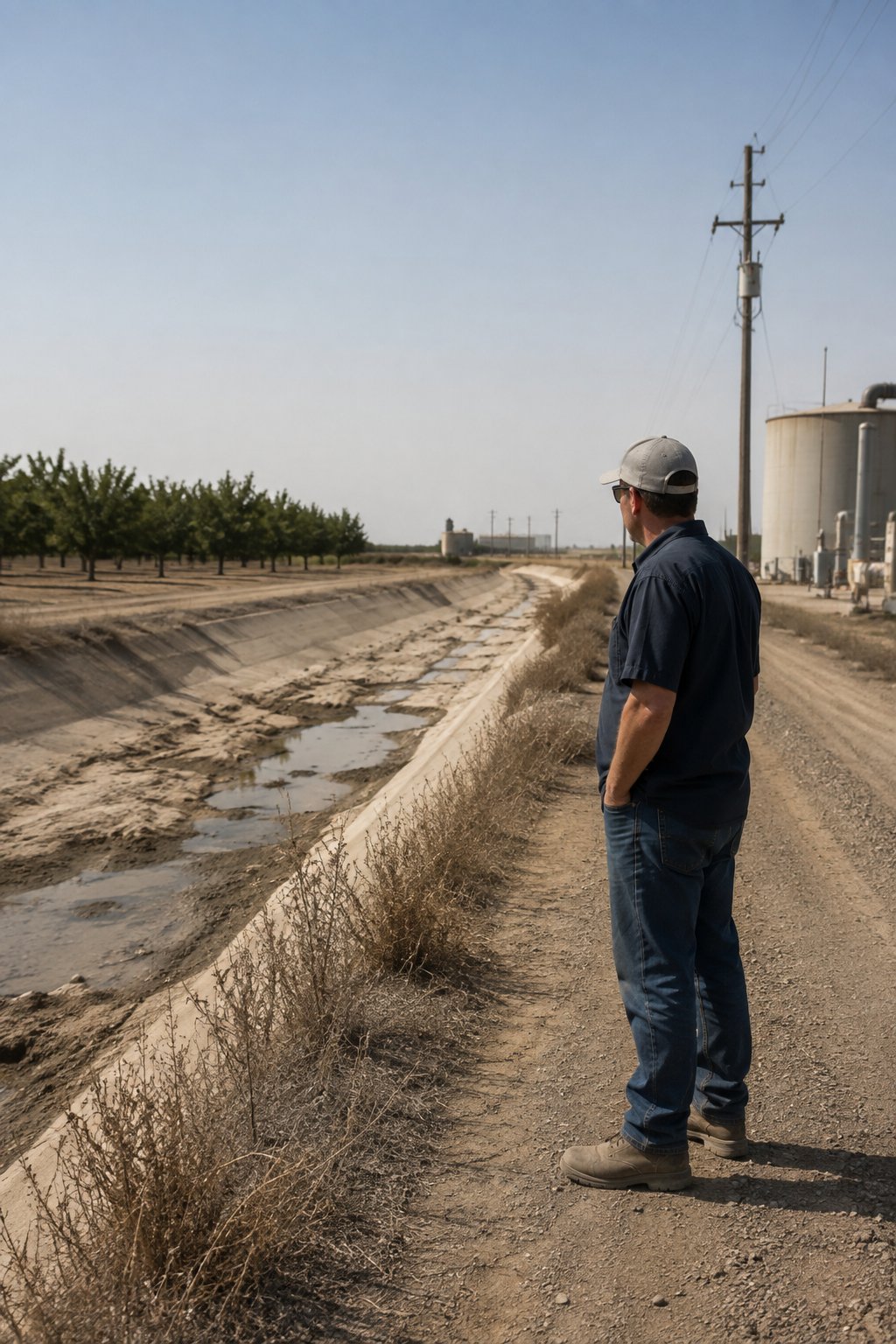
What matters for businesses during drought?
It is not the absence of rain on a single day that matters, but a prolonged rainfall deficit lasting several weeks that affects crop yields, soil moisture, and water availability. This can influence raw-material prices for grain, sugar, or vegetable oil and, particularly combined with heat, make water for cooling and production processes scarcer. Whether an economic effect occurs depends on the business's own exposure to the affected region or commodity market.
Keep drought risks in view every day
SignalChain monitors relevant external developments daily and notifies you as soon as something becomes relevant for your business.
What economic consequences can drought have?
- falling crop yields in the affected growing region
- rising raw-material prices for grain, sugar, or vegetable oil
- water scarcity for cooling and production processes
- amplified effects when combined with simultaneous heat
- possible quality losses in agricultural raw materials
- delays or higher costs in sourcing agricultural goods
How does the economic effect arise?
A typical sequence:
The shortfall at the measuring station itself is evidenced; whether it affects crop yields, prices, or an individual business is a possible, not a certain, consequence – and the measurement currently covers only this one region.
Which industries are particularly affected by drought?
Particularly affected are industries with a direct link to crop yields and agricultural raw materials: food manufacturing, when raw-material prices for grain or oilseeds rise (see early-warning system for food manufacturing); agricultural trade, when crop yields in the affected region fall (see early-warning system for agricultural trade); and beverage manufacturing, when both raw materials and water availability for production are affected (see early-warning system for beverage manufacturing). Here too, what matters is the business's own link to the affected region or commodity market, not industry membership alone.
What early indicators are there?
- DWD rainfall series (90-day total)
- Measured at a station in the Münsterland region; currently the only measuring point for this indicator.
- Seasonal 10th percentile
- The benchmark: whether the dryness is unusual for the season at this station.
- Trigger threshold of 30 mm below the percentile
- Must be undershot persistently for at least 14 days to trigger a candidate.
- Simultaneous heat reports
- An amplifying factor when dryness and high temperatures coincide (see Heat).
When is drought really relevant for a business?
Only when a traceable impact chain reaches the business itself: raw materials sourced from the affected growing region, dependence on agricultural commodity prices, or the business's own water needs for cooling and production. A single dry day, or a report without such a link, is usually economically inconsequential. It should also be noted that the current measurement covers only one region, not the whole of Germany.
How does SignalChain help?
SignalChain evaluates the 90-day rainfall total at a DWD measuring station in the Münsterland region and compares it against the seasonal 10th percentile. If the total falls at least 30 mm below this percentile, persistently for at least 14 days, a candidate is created – supplemented by simultaneous heat reports as an amplifying factor. This observation is currently limited to this one region and not yet available for all regions of Germany.
For official hazard and disaster warnings, the relevant authorities remain the definitive source; SignalChain does not provide advice for your individual situation.
Keep drought risks in view every day
SignalChain monitors relevant external developments daily and notifies you as soon as something becomes relevant for your business.
Does SignalChain cover drought across all of Germany?
No, not currently. The rainfall analysis relies on a single DWD measuring station in the Münsterland region, not a network of stations across the country.
When does drought become relevant for a business?
When raw materials are sourced from the affected region, when there is dependence on agricultural prices, or when the business has its own water needs – not on every dry day.
Which industries are particularly affected by drought?
Mainly food manufacturing and beverage manufacturing via raw-material prices and water needs, and agricultural trade via falling crop yields.
How does this differ from an official drought warning?
There is no single official drought warning as there is for storms or heat. SignalChain instead evaluates the sustained rainfall total against the seasonal benchmark.
Does SignalChain replace official assessments of dryness?
No. For a complete assessment of dryness, official bodies and scientific services remain the definitive source; SignalChain adds its own, regionally limited early indication.