Procurement risks
Procurement risks: which risks businesses should recognise early
Procurement risks are developments that can cause goods, raw materials, components or services not to be available as planned. For businesses they are relevant because they can affect costs, lead times and production – often before the actual order is affected. Many of these risks do not arise at the direct supplier but much earlier: in a weather event, a closure, a political measure. Anyone who only watches the supplier usually only sees the cause once the consequence has already occurred.
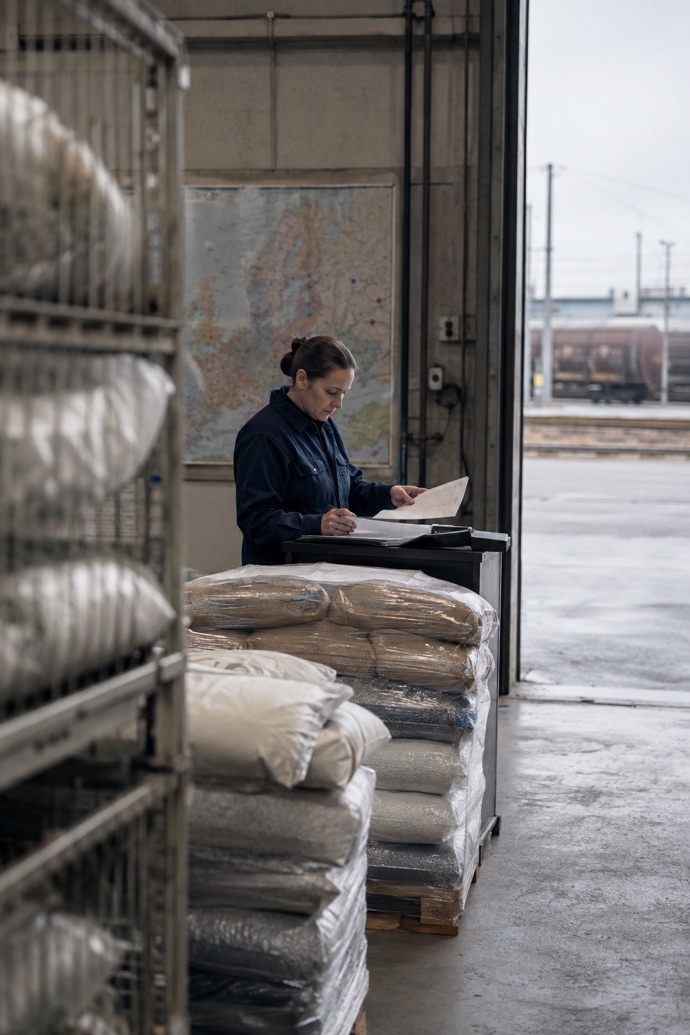
What are procurement risks?
Procurement risks are events or developments that can cause needed goods, raw materials, components or services not to be available as planned.
Here a distinction is worth making: a supply problem has already occurred – a delivery is late, a price has already risen. A procurement risk, by contrast, is still open: an event indicates that a disruption could arise, without it already being certain.
Procurement risks do not only arise at the supplier itself. A supplier can be reliable and still be affected by an event beyond its control – a blocked transport route, a new customs rule, a jump in energy prices. Anyone who only watches the supplier relationship overlooks this external layer.
Keep procurement risks in view every day
SignalChain monitors relevant external developments daily and gets in touch as soon as something becomes relevant to your business.
€299 net/month · notified when relevant · cancel monthly
What types of procurement risks are there?
Supplier risks
Risks that lie directly with the supplier – financial difficulties, quality problems, capacity constraints.
Beispiel: A supplier reports a delay because one of its own machines has broken down.
Folge: Your own production line waits for an intermediate product.
Transport and logistics risks
Disruptions on the route between supplier and business.
Beispiel: A motorway is closed after an accident, a port reports a restriction.
Folge: A delivery is delayed or has to be rerouted.
Raw material and materials risks
Scarcity or price fluctuations for raw materials and intermediate products.
Beispiel: A raw material becomes scarce due to a production disruption in the region of origin.
Folge: Higher purchase prices or longer procurement times.
Weather and natural events
Extreme weather that affects transport routes or production.
Beispiel: Low water levels on a waterway reduce the possible cargo load per vessel.
Folge: Higher freight costs for goods flows dependent on waterways.
Political and regulatory risks
New customs rules, trade restrictions, sanctions.
Beispiel: A country imposes an export restriction on an intermediate product.
Folge: A sourcing route becomes unavailable or significantly more expensive.
Energy and production risks
Fluctuations in energy prices, failures at production facilities.
Beispiel: A facility outage at a key supplier is officially confirmed.
Folge: An intermediate product becomes scarce for a limited period.
How do procurement risks arise?
A single event rarely leads directly to a procurement problem. Usually the effect runs through several stages – an impact chain:
What matters is the distinction between what is confirmed and what is merely possible. That a water level falls below a certain mark is a confirmed fact. Whether and how strongly this delays a specific delivery is a possible consequence – not a certainty. The further a stage in the chain is removed from the original event, the less certain the statement becomes.
Which early indicators should businesses monitor?
- Water levels
- Show how much cargo a vessel can still take on a waterway.
- Severe weather warnings
- Official warnings show where storms, heavy rain or heat could affect transport routes or production.
- Road closures
- Directly affect inbound and outbound delivery routes.
- Port and waterway reports
- Show capacity restrictions for imported or exported goods.
- Strikes
- Can shut down ports, rail traffic or entire operations at short notice.
- Production outages
- A facility outage at a key supplier can make an intermediate product scarce.
- Trade restrictions
- Can block an existing sourcing route.
- Tariffs
- Change the cost and availability of imported goods.
- Animal disease outbreaks
- Can restrict trade in agricultural commodities via exclusion zones.
- Energy price changes
- Affect production costs and, indirectly, the prices of intermediate products.
- Export bans
- A country of origin can restrict the export of a raw material at short notice.
- Infrastructure disruptions
- Outages in power, rail or telecommunications networks affect production and transport equally.
Which procurement risks are often recognised too late?
Many companies watch their direct supplier closely – creditworthiness, delivery reliability, quality. That makes sense, but it only covers part of the risk.
External events are often only noticed once a consequence has already occurred: when the supplier delivers late, the freight forwarder reports a problem, a material is missing, or a price has already risen. By that point, little time remains for an alternative.
Early warning therefore starts one stage before the supplier – at the external events that can affect a supply chain in the first place, not only at their visible consequence.
Supplier risk and procurement risk: what is the difference?
A reliable supplier can still be affected by an external event beyond its control. Procurement risk is therefore the broader term: it includes supplier risk but extends beyond the supplier relationship.
What can businesses do about procurement risks?
- identify critical materials – which intermediate products would have the greatest impact if disrupted?
- know dependencies – which routes, regions and facilities does procurement rely on?
- review alternative suppliers or sourcing routes
- know transport routes – which ports, roads or waterways are relevant?
- define early indicators – which external values are actually relevant to your own business?
- monitor relevant external events regularly, not only in acute cases
- set escalation thresholds – from what point does a signal become an internal decision?
- clarify responsibilities – who reviews a signal and decides?
None of these measures fully prevents a procurement risk. The goal is not prevention but time: whoever learns of an event earlier has more room for their own decision.
How does an early-warning system for procurement risks work?
An early-warning system for procurement risks systematically monitors external developments, maps possible economic impact chains, assesses relevance for an industry or a business – and separates confirmed facts from mere forecasts.
SignalChain is a daily early-warning briefing for external operational and supply chain risks. It summarises relevant developments and shows: what has happened, what could follow from it, which industries or regions could be affected, and what should continue to be monitored. The briefing arrives by email, with no additional dashboard.
SignalChain is not a supplier rating, a credit check, or an ERP or supplier-management system. The focus is on external events and their possible economic impact on your business and supply chain.
For official hazard and disaster warnings, the relevant authorities remain the definitive source; SignalChain does not provide advice for your individual situation.
Keep procurement risks in view every day
SignalChain monitors relevant external developments daily and gets in touch as soon as something becomes relevant to your business.
What are typical procurement risks?
Typical procurement risks include supplier failures, transport disruptions, raw material shortages, extreme weather, political measures such as tariffs, and energy price fluctuations. Many do not arise at the direct supplier but at external events further upstream – such as a blocked transport route. What matters is whether an event can reach your own sourcing route through a traceable impact chain.
How can procurement risks be recognised early?
By monitoring external early indicators before they turn into a visible disruption: water levels, weather warnings, closure notices, customs notices, energy prices. A single value says little – only the comparison with the previous value and the season shows whether a development is unusual. Regular monitoring gains time compared with pure reaction.
What is the difference between supplier risk and procurement risk?
Supplier risk concerns the creditworthiness, quality or delivery reliability of a specific supplier. Procurement risk is broader: it includes external causes that a supplier cannot influence itself – transport routes, weather, political measures, energy prices. A reliable supplier can still be affected by such an event.
Which external events can affect procurement?
Low water levels and port closures, extreme weather, production outages at suppliers, trade restrictions and customs measures, energy price changes, and animal disease outbreaks with trade relevance. Each of these events can affect intermediate products, transport routes or suppliers through a traceable impact chain – but does not have to. An event only becomes relevant once it has a genuine link to your own business.
Can an early-warning system prevent supply shortages?
No. An early-warning system does not prevent supply shortages, it buys time. It shows which external developments could become relevant before a disruption actually occurs. The decision on what measure follows from that – such as an alternative sourcing route – remains with the business itself.