Energy prices
Energy prices as a business risk
The German electricity market operates on a uniform day-ahead exchange price, which is set anew every hour. A price increase becomes economically relevant mainly for businesses with high, flexible electricity consumption – not simply because a high daily price exists, but through its level, duration and the company's own consumption and contract profile.
Rising energy prices can become relevant for companies when a persistently high day-ahead exchange price coincides with energy-intensive processes that cannot easily be shifted or hedged. What matters is not the price level on a single day, but whether a traceable impact chain reaches the company's own energy sourcing and consumption profile.
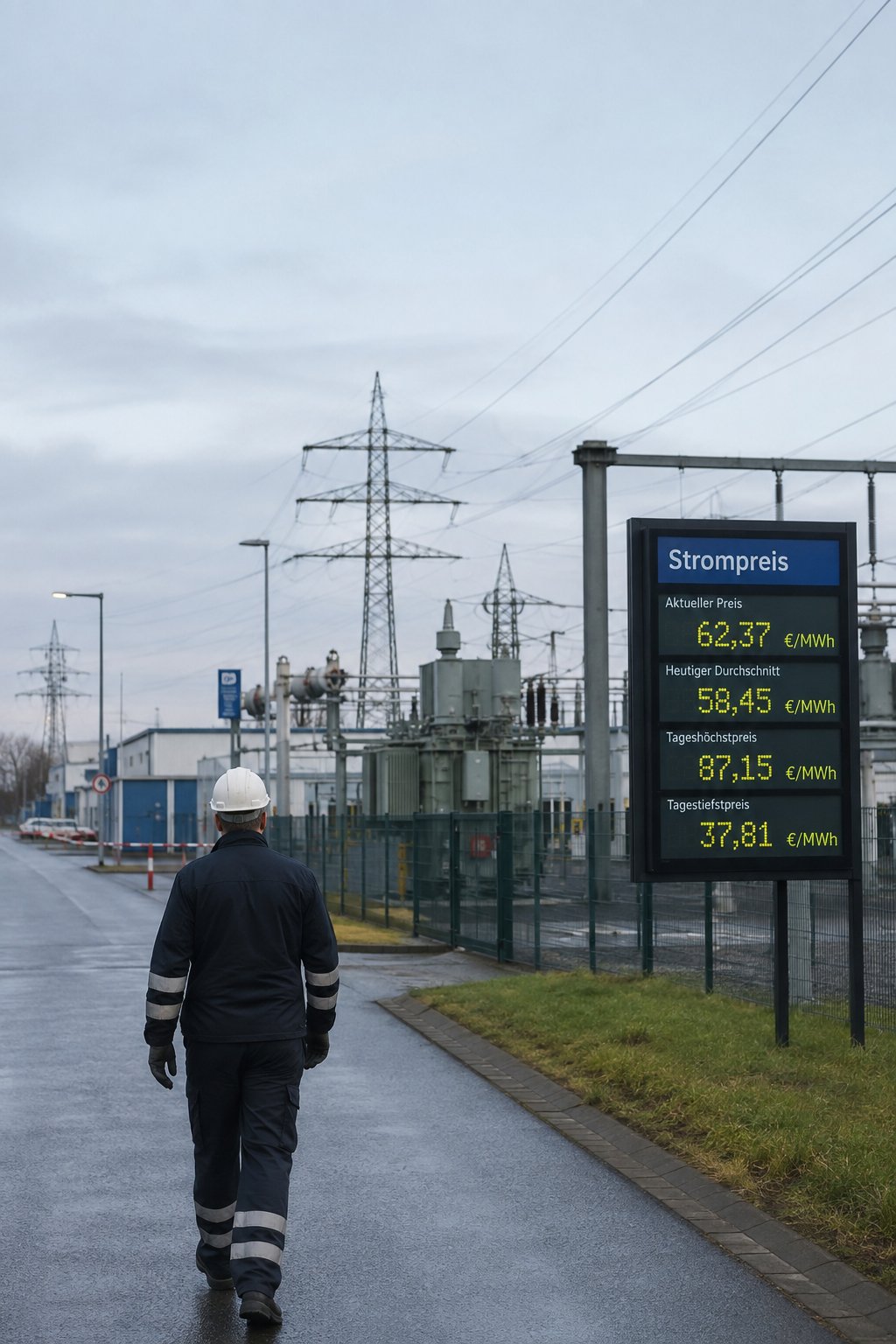
What is relevant for companies about energy prices?
The daily day-ahead exchange price for the German market fluctuates hour by hour regardless. It becomes relevant for a business only once the price level stays clearly above the seasonally normal range for several days and the company's own contract does not absorb that swing – for example with spot-price-linked tariffs or high consumption during peak hours.
What often matters is not the daily average but the most expensive hour of the day, because that is where the largest cost impact forms for businesses with flexible or shiftable consumption. A brief price spike is different from a price level that stays elevated for days.
Keep an eye on energy prices every day
SignalChain monitors relevant external developments daily and gets in touch as soon as it becomes relevant for your business.
What economic consequences can rising energy prices have?
- rising production costs for energy-intensive processes
- margin pressure under fixed-price contracts with customers
- an incentive to shift energy-intensive processes into cheaper time windows
- higher costs for cooling and climate control in warehouses and production
- competitive disadvantages against sites with cheaper energy supply
- liquidity pressure from higher advance payments or prepayments
- delayed investment decisions during a persistently high price level
How does the economic effect arise?
A typical sequence:
The exchange price itself is documented; whether and how strongly an individual business feels the effect depends on its energy sourcing, contract model and consumption profile, and remains a possible, not a certain, consequence.
Which industries are particularly exposed to energy prices?
Particularly exposed are industries with high, hard-to-shift electricity consumption: foundries and electroplating, whose melting and coating processes require high energy input (read more, read more); glass manufacturing and paper manufacturing, whose continuous processes can barely be paused at short notice (read more, read more); and data centres, whose electricity consumption runs around the clock with little seasonal variation (read more). In every case, what matters is the company's own consumption and contract profile, not industry membership alone.
What early indicators exist?
- Day-ahead exchange price (Energy-Charts)
- Daily hourly price for the German electricity market; trigger threshold at a premium of one hundred euros per megawatt-hour above the seasonal median, all-clear from a premium of forty euros.
- Residual load forecast
- Shows the electricity demand that must be covered conventionally after subtracting renewable generation, giving a lead indicator for possible price spikes.
- Daily peak price instead of daily average
- What matters is the most expensive hour of the day, because that is where the largest cost impact forms for flexible consumers.
- Duration of the elevated price level
- A persistently high price over several days is assessed differently from a single daily peak.
When are energy prices genuinely relevant for a business?
Only when a persistently high exchange price hits a business whose contract does not absorb the swing and whose consumption cannot be shifted at short notice – not simply because a high daily price is reported. For most businesses, a single expensive day is different from a price level that stays elevated for several days.
How does SignalChain help?
SignalChain tracks the day-ahead exchange price for Germany and Luxembourg via Energy-Charts, together with the residual load forecast as a lead indicator, and assesses whether a price increase persists over several days and so goes beyond a single daily peak.
For official hazard and disaster warnings, the relevant authorities remain the definitive source; SignalChain does not provide advice for your individual situation.
Keep an eye on energy prices every day
SignalChain monitors relevant external developments daily and gets in touch as soon as it becomes relevant for your business.
Which energy prices does SignalChain monitor?
The day-ahead exchange price for the German and Luxembourg market (Energy-Charts) and the residual load forecast as a lead indicator for possible price spikes.
When are energy prices relevant for my business?
When a persistently high price level coincides with high, hard-to-shift electricity consumption and your own contract does not absorb the swing.
Which industries are particularly exposed to energy prices?
Mainly energy-intensive industries with continuous processes such as foundries, electroplating, glass and paper manufacturing, and data centres with round-the-clock electricity consumption.
How does this differ from a supplier's electricity price alert?
Supplier notices usually concern your own contract. SignalChain additionally assesses whether a price spike persists across the entire German market or remains a one-off outlier.
Does SignalChain replace energy consulting?
No. SignalChain provides an early signal about market developments, not individual advice on contracts or hedging strategies.