Facility outage
Facility outages as a supply chain risk
An industrial incident with a wide-area hazardous-substance or explosion warning is initially a local event at a single site. It becomes economically relevant for a business only once the affected facility produces a concentrated intermediate that cannot be replaced at short notice.
A facility outage can become relevant for companies when the affected industrial plant supplies a concentrated intermediate for which no alternative is available at short notice. What matters is not the scale of the warning, but whether a traceable impact chain reaches the company's own procurement.
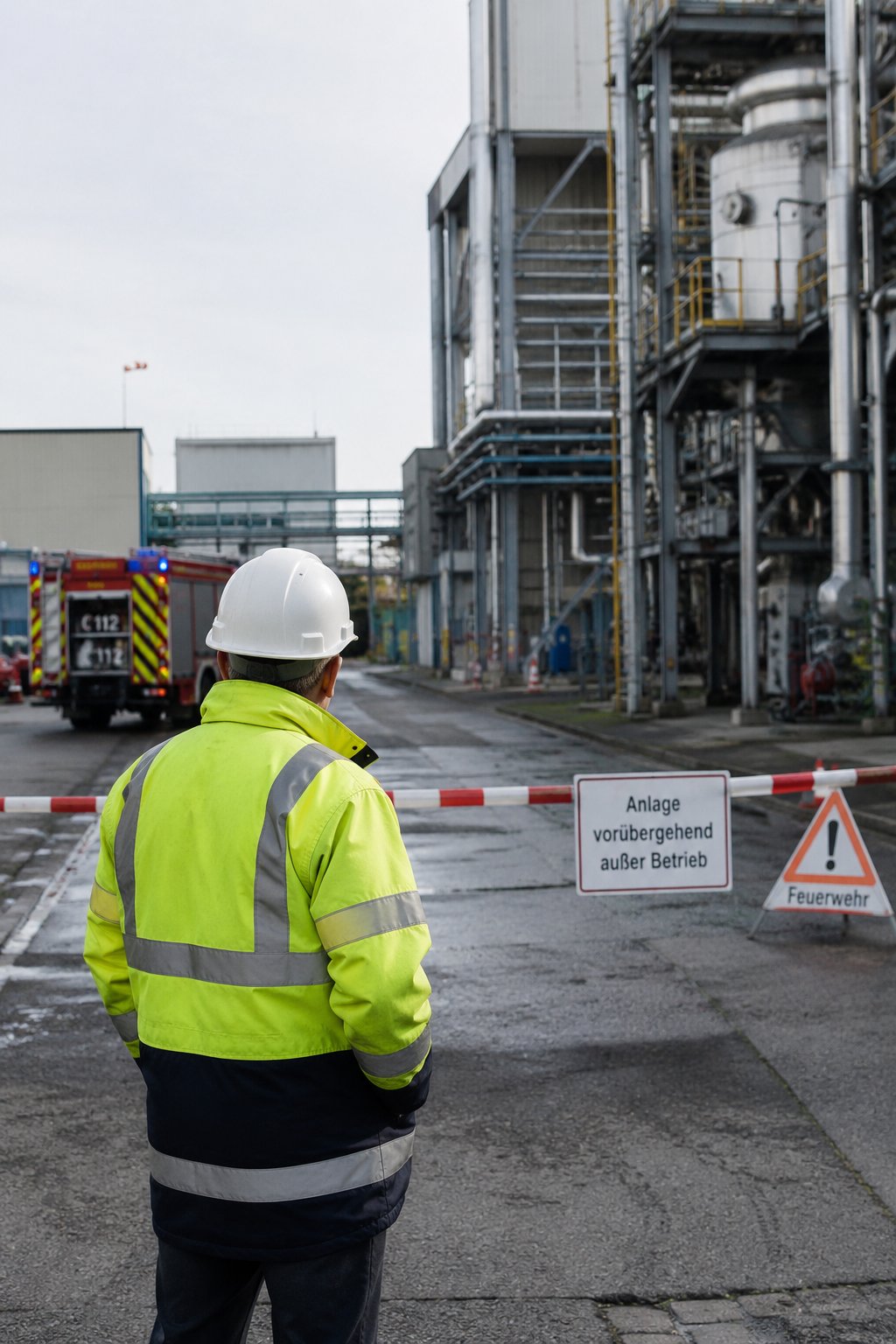
What is relevant for companies about a facility outage?
A wide-area hazardous-substance or explosion warning initially only says that something has happened at a site – not which goods or intermediates are affected. It becomes relevant for a business only once it becomes known which facility is affected and whether it produces an intermediate that plays a role in the company's own supply chain.
The 1993 Sumitomo resin plant fire serves in the methodology as a historical reference case for such a single point of failure: one facility with a high market share in an intermediate, whose outage affected supply chains worldwide. Historical analogies are indications here, not automatic forecasts.
Keep an eye on facility outages every day
SignalChain monitors relevant external developments daily and gets in touch as soon as it becomes relevant for your business.
What economic consequences can a facility outage have?
- loss of a concentrated intermediate with no alternative suppliers at short notice
- production cutbacks at affected supplier businesses
- delays for safety-relevant or certified components
- sourcing from alternative suppliers at higher cost or longer lead times
- quality fluctuations from intermediates substituted at short notice
- committed emergency-response and clean-up capacity in the region
- possible price pressure on highly concentrated goods classes once the affected facility is specifically known
How does the economic effect arise?
A typical sequence:
The hazardous-substance or explosion warning itself is documented; whether a specific supply chain is affected, and what price effect results, can only be assessed once the affected facility is known – until then it remains a possible, not a documented, consequence.
Which industries are particularly exposed to a facility outage?
Particularly exposed are industries with concentrated supplier structures: mechanical engineering and vehicle manufacturing, which can depend on individual specialised suppliers of intermediates (read more, read more); aerospace, where certified components often come from only a few facilities (read more); chemicals, whose own intermediates frequently come from a handful of large plants (read more); and metal finishing, which depends on specialised chemicals and coating agents (read more). What matters is whether the company's own procurement actually depends on the affected facility.
What early indicators exist?
- Official hazardous-substance and explosion warnings
- Report wide-area industrial incidents on a case-by-case basis, depending on official reporting.
- Affected facility and goods class
- Only once the specific facility is known can its role in the supply chain be assessed.
- Concentration class of the intermediate
- Shows whether realistic alternative suppliers are available at short notice.
- Historical reference cases
- The 1993 Sumitomo resin plant fire serves as an analogy for a single point of failure, not as an automatic forecast.
When is a facility outage genuinely relevant for a business?
Only when the specific affected facility is known and produces an intermediate that plays a role in the company's own procurement and cannot be replaced at short notice – not simply because of a large or prominent hazardous-substance warning as such. Without knowing the affected facility, no reliable statement about price or supply effects is possible.
How does SignalChain help?
SignalChain monitors wide-area hazardous-substance and explosion warnings depending on official reporting, and once the affected facility becomes known, checks whether a concentrated goods class or a known supplier is affected. A price effect is explicitly not inferred from the warning alone.
For official hazard and disaster warnings, the relevant authorities remain the definitive source; SignalChain does not provide advice for your individual situation.
Keep an eye on facility outages every day
SignalChain monitors relevant external developments daily and gets in touch as soon as it becomes relevant for your business.
Does SignalChain cover facility outages across all of Germany?
No, coverage depends on official reporting on a case-by-case basis, not on a nationwide coverage commitment.
When is a facility outage relevant for my business?
When the affected facility produces an intermediate that you source and that cannot be replaced at short notice.
Which industries are particularly exposed to facility outages?
Mainly mechanical engineering, vehicle manufacturing, aerospace, chemicals and metal finishing with concentrated supplier structures.
How does this differ from an official hazardous-substance warning?
The official warning reports the event itself. SignalChain additionally checks, once known, whether the affected facility plays a role in known supply chains.
Does SignalChain replace official disaster or hazardous-substance warnings?
No. For binding warnings on the ground, the responsible authorities remain the definitive source.