River flooding
River flooding as a business and supply chain risk
A rising water level is initially just an official notice. River flooding becomes economically relevant when it directly affects production or storage sites, closes transport routes, or temporarily weakens purchasing power in an affected region – regardless of whether a business's own site lies within the flood zone or depends on it only through customers, suppliers or transport routes.
River flooding can become relevant for businesses when gauges reach or exceed the official “medium flood” alert class, affecting sites, transport routes or regional demand. What matters is not the size of the reported flood area, but whether a traceable impact chain reaches the business or its supply chain.
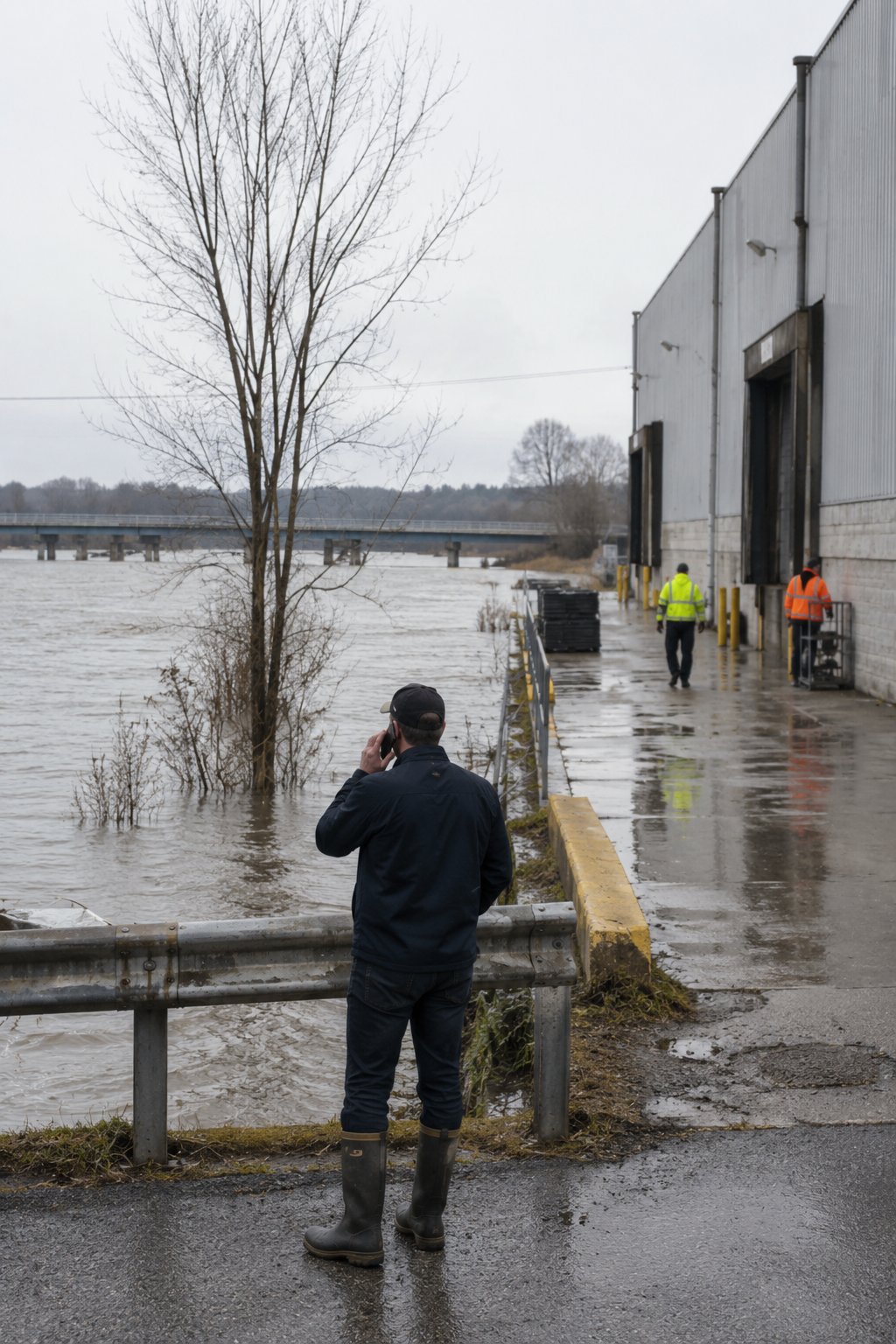
What matters for businesses about river flooding?
For businesses, river flooding works through two distinct paths that should be considered separately. The first is direct: flooded production sites, warehouses or retail space can suffer physical damage or be temporarily unusable. The second path is indirect and often overlooked: in a flooded region, purchasing power and demand can temporarily collapse even if the business's own site is not affected at all.
What determines economic relevance is the official alert class of a gauge, not the area or media attention a report receives. Whether a specific business is affected depends on whether its own or supplying sites, sales markets or transport routes lie in the affected region.
Keep river-flooding risks in view every day
SignalChain monitors relevant external developments daily and gets in touch as soon as something becomes relevant to your business.
What economic consequences can river flooding have?
- flooding of production and storage sites in areas near water
- physical damage to machinery, raw materials and finished goods
- closure of roads and rail lines in the affected region
- restricted usability of waterways for freight transport
- temporarily weakened demand and purchasing power in the affected region
- delays in inbound and outbound deliveries due to closed access routes
- higher need for replacement capacity when own or supplying sites are affected
How does the economic effect arise?
A typical sequence:
What is documented is the exceedance of the official alert class at a specific gauge; whether a business's own site, supplier or sales market is affected depends on its own link to the region and remains a possible, not a certain, consequence.
Which industries are particularly affected by river flooding?
What is affected is rarely an entire industry at once, but the specific site or sales link: the construction sector, when building sites or material storage lie in areas near water (see early-warning system for construction); the storage sector, because flooded warehouse space can mean direct damage (see early-warning system for storage); logistics and freight forwarding, because roads, rail lines and waterways can be affected simultaneously (see early-warning system for logistics); the wholesale and specialist trade, when purchasing power temporarily collapses in a flooded region (see early-warning system for wholesale); and the agricultural trade, when flooded land affects harvests or stocks (see early-warning system for the agricultural trade). What matters in every case is the actual link to the affected region, not industry membership alone.
What early indicators are there?
- Cross-state flood portal (LHP)
- Official alert classes per gauge across 15 German states, as the central basis for monitoring.
- “Medium flood” alert class
- Level 2 of 4 official levels per gauge, used as the threshold for economic relevance.
- Precipitation forecast (DWD)
- Provides lead time before a gauge actually reaches a critical alert class.
- Gauge trend versus previous days
- Shows the direction and speed of a rise or fall.
- Seasonal comparison
- Assesses whether a water level is unusually high for the season.
When does river flooding actually matter for a business?
Only when a business's own site, an important supplier or an important sales market actually lies in the affected region, and the gauge reaches or exceeds the official “medium flood” alert class. River flooding in a region without such a link usually has no consequence for the individual business, however large the affected area is reported to be.
What matters here is the distinction between the direct and indirect path: a site outside the flood zone can still be affected if an important customer or supplier lies in the region. Conversely, a site near a waterway is not automatically affected as long as the alert class is not reached.
How does SignalChain help?
SignalChain monitors the official alert classes of the cross-state flood portal (LHP) across 15 German states and assesses whether a gauge has reached or exceeded the “medium flood” threshold. For Hamburg, only an approximated assessment is currently available, since no dedicated LHP gauge is maintained there.
An exceeded alert class alone does not create an alert level. Only once an impact pattern establishes a link to a specific site, transport route or sales market, and the impact chain remains traceable, does the observation flow into a briefing.
For official hazard and disaster warnings, the relevant authorities remain the definitive source; SignalChain does not provide advice for your individual situation.
Keep river-flooding risks in view every day
SignalChain monitors relevant external developments daily and gets in touch as soon as something becomes relevant to your business.
How far does SignalChain's river-flooding coverage reach?
In most of the 15 German states, via the official alert classes of the cross-state flood portal (LHP), from the “medium flood” threshold upward. For Hamburg only an approximation is available, since no dedicated LHP gauge is maintained there.
When does river flooding become relevant for a business?
When a business's own site, supplier or sales market lies in a region where a gauge reaches or exceeds the “medium flood” alert class – not simply through a general flood report.
Which industries are particularly affected by river flooding?
Mainly construction, storage, logistics and freight forwarding with sites or transport routes in areas near water, plus wholesale, specialist trade and the agricultural trade via demand and harvest effects.
How does this differ from an official flood warning?
Official warnings report the gauge situation itself. SignalChain additionally assesses whether a level is unusual for the season and whether a traceable impact chain exists to a specific site or sales market.
Does SignalChain replace official warnings?
No. For official flood warnings and disaster-response notices, the responsible authorities remain the definitive source.