Coastal flooding
Coastal flooding as a business and supply chain risk
A storm surge is initially just a weather situation on the North Sea coast. It becomes economically relevant once ports are closed, seagoing vessels are rerouted, or coastal sites and storage facilities are affected – regardless of whether a business itself is located on the coast or depends on it only through a port and sea route it uses.
Coastal flooding can become relevant for businesses when a storm surge closes ports, interrupts cargo handling or reroutes seagoing vessels, delaying imports, exports or deliveries via a port in use. What matters is not a business's proximity to the coast, but whether a traceable impact chain via an actually used port reaches the business or its supply chain.
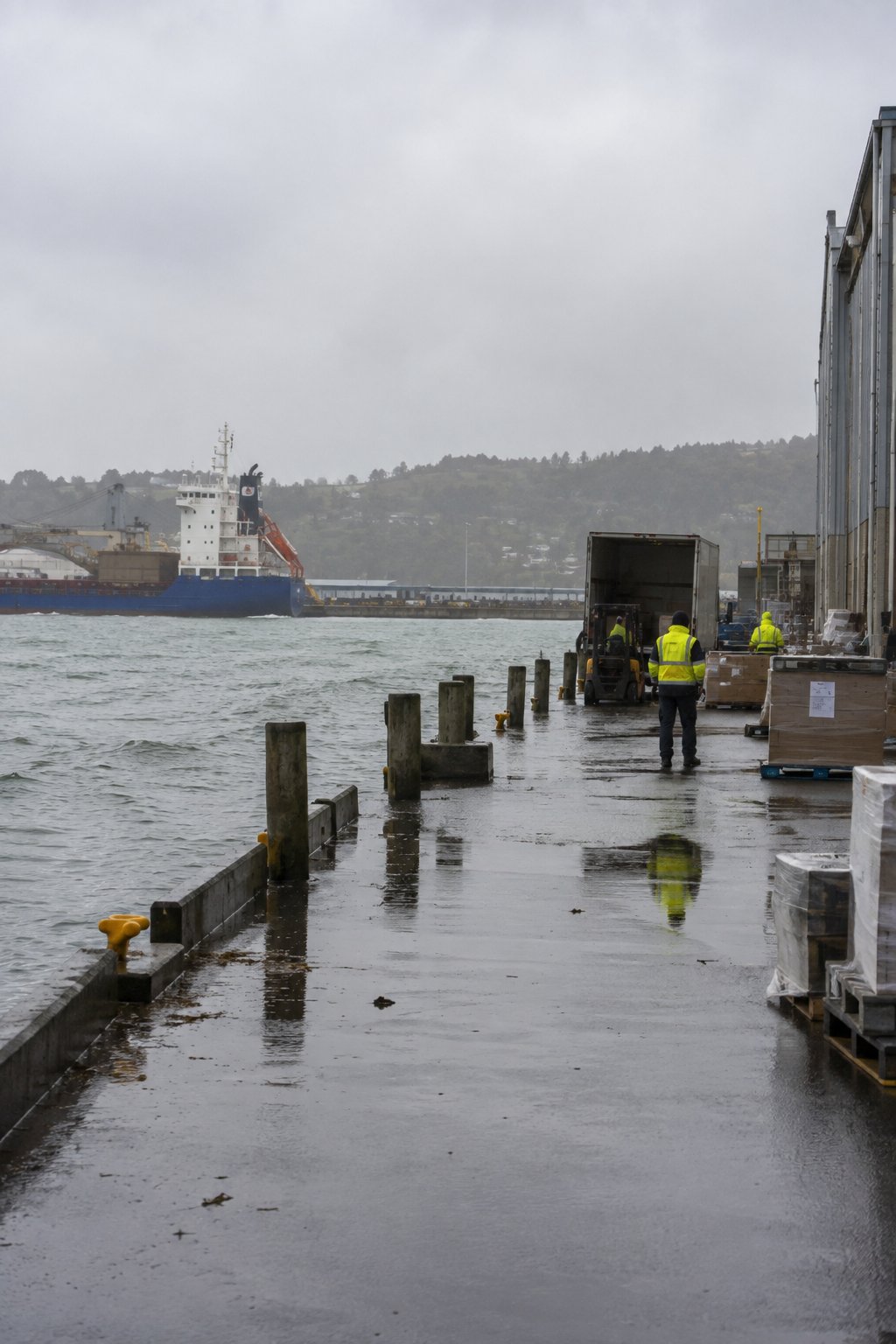
What matters for businesses about coastal flooding?
It is not the storm surge as a weather event that matters for a business, but its effect on port operations, sea routes and coastal infrastructure. If the expected water level exceeds the official “storm surge” threshold, port operators may close quays or temporarily halt cargo handling, even if the physical damage ultimately remains limited.
What is affected is mainly businesses that use ports on the North Sea coast or tidal rivers for imports, exports or deliveries. A business without such a link is usually left economically unaffected by a storm surge, even if its site is geographically close to the coast.
Keep coastal-flooding risks in view every day
SignalChain monitors relevant external developments daily and gets in touch as soon as something becomes relevant to your business.
What economic consequences can coastal flooding have?
- closure of port and quay facilities during a storm surge
- interrupted handling of containers, bulk cargo or liquid loads
- delayed or rerouted seagoing vessels
- damage to coastal infrastructure and storage facilities
- restricted road and rail access to ports during the storm surge
- higher securing and preparation costs for coastal sites
- delays for imported or exported raw materials and goods
How does the economic effect arise?
A typical sequence:
What is documented is the storm-surge forecast and the actual closure of a port or quay; whether a specific delivery is affected depends on the port used and the timing of the storm surge, and remains a possible, not a certain, consequence.
Which industries are particularly affected by coastal flooding?
What is affected is mainly whoever actually uses ports on the North Sea coast or tidal rivers: port cargo handling itself, because quays and handling facilities can be closed directly during a storm surge (see early-warning system for port cargo handling); logistics and freight forwarding, because inbound and outbound flows via the port can be interrupted (see early-warning system for freight forwarding and early-warning system for logistics); and the wholesale trade, to the extent imports or exports run via an affected port (see early-warning system for wholesale). What matters in every case is the port and sea route used, not industry membership or proximity to the coast alone.
What early indicators are there?
- BSH gauges at 13 coastal and tidal stations
- Official water-level measurement and forecasting from the Federal Maritime and Hydrographic Agency (BSH).
- Official “storm surge” threshold
- 1.5 m above mean high water, per BSH's parameter documentation.
- Storm-surge forecast
- Lead time of up to a few hours before the expected peak water level.
- Wind and air pressure over the North Sea
- Key factors determining the height of an expected storm surge.
- Official port closure notices
- Show whether a specific port or quay is actually affected.
When does coastal flooding actually matter for a business?
Only when a business uses a specific port on the North Sea coast or tidal rivers for imports, exports or deliveries, and that port could be affected by a forecast storm surge. A storm-surge report without such a link usually has no consequence for the individual business, however prominent the topic is in the news.
Mere geographic proximity to the coast is not a reliable criterion: a site directly on the coast with no seaport use of its own is economically barely affected by a storm surge, while a business located far inland can react sensitively through its imports.
How does SignalChain help?
SignalChain monitors the 13 official coastal and tidal gauges of the Federal Maritime and Hydrographic Agency (BSH) and assesses whether an expected water level reaches the official “storm surge” threshold – 1.5 m above mean high water. The monitoring is explicitly limited to the coast, the North Sea and tidal rivers; inland flood situations are monitored separately.
A storm-surge forecast alone does not create an alert level. Only once an impact pattern establishes a link to a specifically used port or sea route, and the impact chain remains traceable to an affected delivery, does the observation flow into a briefing.
For official hazard and disaster warnings, the relevant authorities remain the definitive source; SignalChain does not provide advice for your individual situation.
Keep coastal-flooding risks in view every day
SignalChain monitors relevant external developments daily and gets in touch as soon as something becomes relevant to your business.
How far does SignalChain's coastal-flooding coverage reach?
Via the 13 official coastal and tidal gauges of the BSH on the North Sea coast and tidal rivers. Inland flood situations are not covered by this; a separate river-flooding monitor applies there.
When does coastal flooding become relevant for a business?
When a business uses a port on the North Sea coast or tidal rivers for imports, exports or deliveries and an expected water level reaches the official “storm surge” threshold – not simply through proximity to the coast.
Which industries are particularly affected by coastal flooding?
Mainly port cargo handling, logistics and freight forwarding with direct port use, plus wholesale to the extent imports or exports run via an affected port.
How does this differ from an official storm-surge warning?
Official warnings report the expected water-level situation itself. SignalChain additionally assesses whether a specifically used port or sea route could be affected.
Does SignalChain replace official warnings?
No. For official storm-surge warnings, the Federal Maritime and Hydrographic Agency and the responsible coastal authorities remain the definitive source.