Storm
Storm and hail as an operational and transport risk
A storm is first and foremost a weather event for a region. It becomes economically relevant when it suspends outdoor work-safety rules, hinders sea routes and ports, disrupts transport routes, or damages overhead power lines – regardless of how prominently it features in the news.
Storms can become relevant for businesses when they affect outdoor work safety, sea routes, ports, or transport routes. What matters is not the official warning level alone, but whether a traceable impact chain reaches the business's own site, route, or operations.
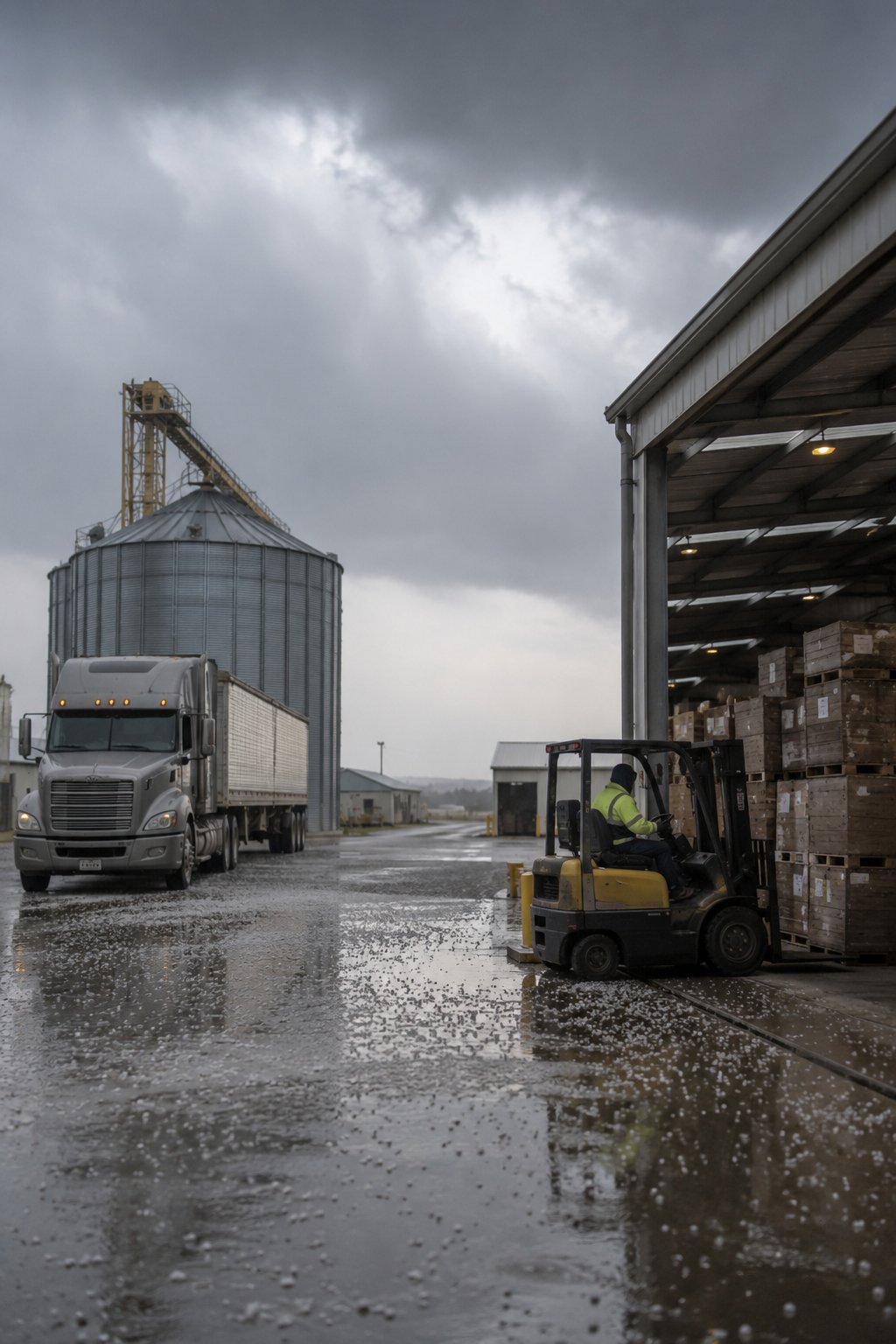
What matters for businesses during a storm?
It is not the storm itself that matters, but its possible consequences for work safety, sea routes, transport routes, and energy supply. An official wind warning for a federal state can suspend outdoor construction work, hinder shipping in ports, or disrupt road and rail traffic – depending on whether a site, route, or port the business uses lies in the affected region.
Keep storm and hail risks in view every day
SignalChain monitors relevant external developments daily and notifies you as soon as something becomes relevant for your business.
What economic consequences can a storm have?
- suspension of work-safety measures for outdoor activities (construction, forestry, agriculture)
- hindered sea routes and port handling due to heavy swell and wind
- disruptions to rail and road traffic from fallen trees or closures
- air-traffic disruptions and delays in air freight
- property damage to buildings, roofs, and equipment
- power outages from damaged overhead lines
- crop losses from hail or flattened plantings
How does the economic effect arise?
A typical sequence:
The official warning level itself is evidenced; whether a business's own site, route, or port is affected remains a possible, not a certain, consequence.
Which industries are particularly affected by storm and hail?
Particularly affected are industries with outdoor activities and sea routes: general contracting and civil engineering, when work-safety rules suspend outdoor work (see early-warning system for general contracting and early-warning system for civil engineering); port handling, when swell and wind restrict port operations (see early-warning system for port handling); freight forwarding and logistics, when road or sea routes are disrupted (see early-warning system for freight forwarding and early-warning system for logistics); and agricultural trade, when hail or storm damages cropland (see early-warning system for agricultural trade). Here too, what matters is the business's own exposure, not industry membership alone.
What early indicators are there?
- MeteoAlarm wind warning level by federal state
- Official, EU-wide traffic-light system (green/yellow/orange/red), tracked separately for each federal state.
- Trigger threshold: warning level orange
- From rank 2 of 4 a candidate is created; lower levels do not trigger analysis.
- Downgrade to green
- Signals the end of the official warning situation for the affected federal state.
- Affected federal state and time window
- Assesses whether a site, route, or port the business uses lies within the warning area and period.
When is a storm really relevant for a business?
Only when a traceable impact chain reaches the business itself: a site or construction location within the warning area, a port or sea route in use, or a transport route that closures could affect. A high warning level for a federal state alone, without such a link, is often inconsequential for a specific business.
How does SignalChain help?
SignalChain evaluates the official MeteoAlarm wind warning level for German federal states and, from warning level orange, assesses whether a site, sea route, port, or transport route in use lies within the affected area. A downgrade to green is factored in just as much as the upgrade itself.
For official hazard and disaster warnings, the relevant authorities remain the definitive source; SignalChain does not provide advice for your individual situation.
Keep storm and hail risks in view every day
SignalChain monitors relevant external developments daily and notifies you as soon as something becomes relevant for your business.
Does SignalChain cover storms across all of Germany?
SignalChain evaluates the official MeteoAlarm wind warning level separately for each federal state – there is no single level for the whole country, but an assessment for each affected state.
When does a storm become relevant for a business?
When a site, sea route, port, or transport route in use lies within the warning area and the warning level has reached orange or higher – not with every wind warning.
Which industries are particularly affected by storm and hail?
Mainly general contracting and civil engineering with outdoor work safety, port handling and freight forwarding with sea routes, and agricultural trade with hail damage to crops.
How does this differ from an official storm warning?
The official warning reports the weather situation for the federal state itself. SignalChain additionally assesses whether a specific site or route in use could be affected.
Does SignalChain replace official warnings?
No. For official weather and safety warnings, the relevant authorities remain the definitive source.