Animal disease
Animal disease as a trade and supply chain risk
An animal disease outbreak is first and foremost an event for livestock farming and veterinary authorities. It becomes economically relevant for a business only once an EU legal act establishes a restricted zone with movement restrictions in response – and that zone affects the business's own site, a supplier, a customer, or a transport route in use, regardless of the distance to the outbreak location.
Animal diseases can become relevant for businesses when an EU legal act establishes a restricted zone with movement restrictions that affects the business's own site, supplier, customer, or transport route. What matters is not the distance to the outbreak location, but whether the named restricted zone creates a traceable impact chain reaching the business or its supply chain.
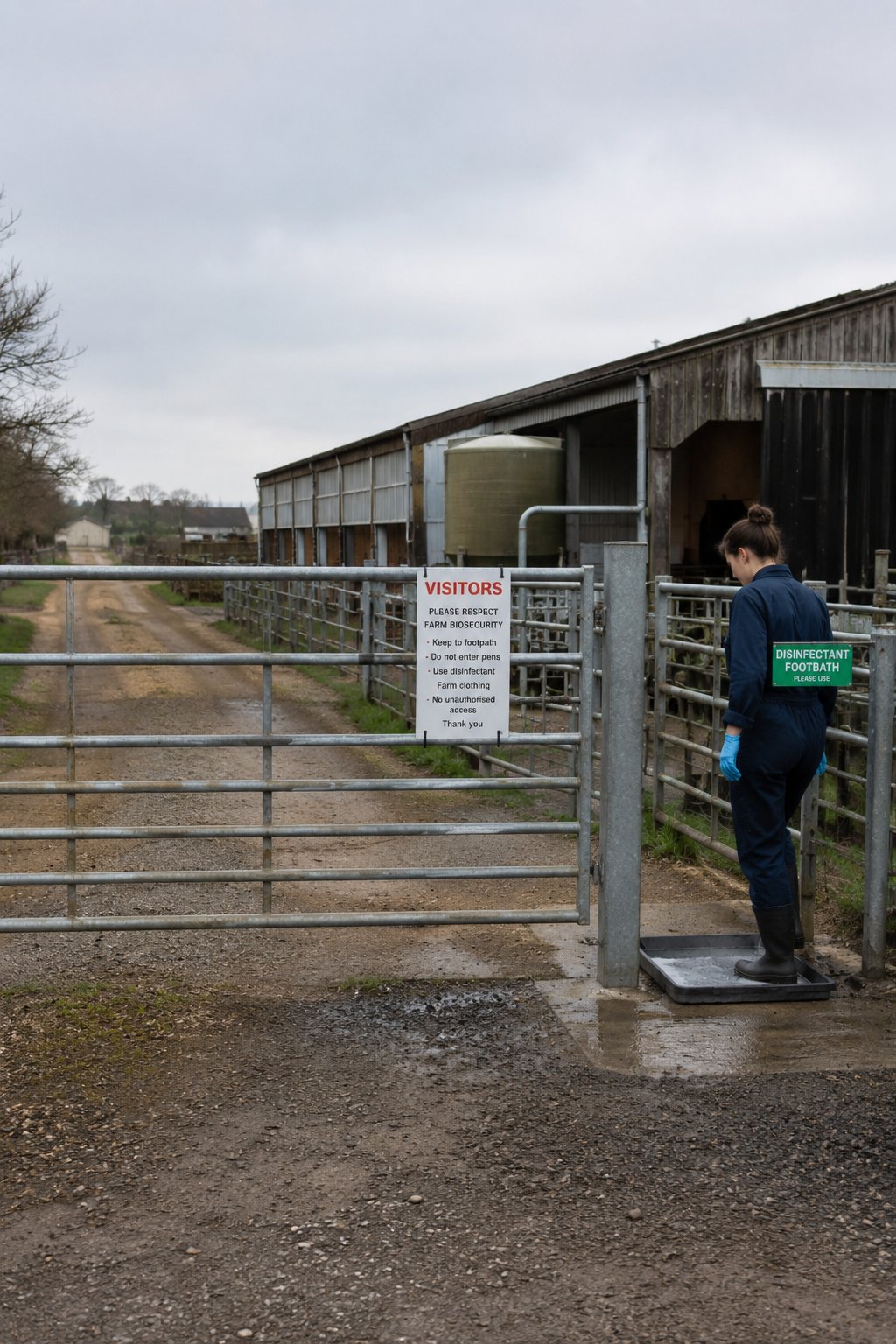
What matters for businesses during an animal disease outbreak?
It is not the disease outbreak itself that affects a business economically, but the EU legal act that establishes a restricted zone with movement restrictions in response. Such a legal act can be read in two ways: it can affect a specific category of goods – for example, an export ban on meat, live animals, or feed from the zone – or it can affect a specific route, meaning a transport or movement ban into, out of, or through the zone, regardless of the end product. What matters for a business is whether its own goods, supplier, customer, or transport route lies within the named zone – not whether the outbreak is in the news.
Keep animal disease risks to trade and production in view
SignalChain monitors relevant external developments daily and notifies you as soon as something becomes relevant for your business.
What economic consequences can an animal disease have?
- export restrictions on meat, live animals, or feed from the restricted zone
- interrupted deliveries to slaughterhouses or dairies within the zone
- spoilage risk for animals or raw milk that cannot be collected
- shift of trade flows toward suppliers outside the zone
- price pressure on affected goods categories from tightened or displaced supply
- transport and movement bans for vehicles entering or leaving the zone
- higher inspection and documentation burden at zone boundaries
How does the economic effect arise?
A typical sequence:
The legal act and the restricted zone it establishes are themselves evidenced; whether the business itself is affected depends on its own site, suppliers, or customers within the zone, and remains a possible, not an automatic, consequence.
Which industries are particularly affected by animal disease?
Particularly affected are businesses with a direct link to animals, meat, or dairy products from a restricted zone: meat processing, when slaughter animals or meat from the affected region can no longer be delivered (early-warning system for meat processing); dairies, when raw-milk collection from a zone is restricted (early-warning system for dairies); agricultural trade, when export markets for animals, meat, or feed disappear (early-warning system for agricultural trade); food manufacturing, when a raw material of animal origin is affected; and freight forwarding, when transport through or into a restricted zone is prohibited. What matters in every case is whether the specific goods or transport route falls under the regulation.
What early indicators are there?
- New EUR-Lex legal acts on restricted zones
- Each new or amended implementing act marks a newly defined or extended restricted zone.
- Change in the boundary of an existing restricted zone
- Expansion or reduction indicates whether the situation is possibly worsening or easing.
- Duration of an active legal act
- Assesses whether it is a short-term or longer-lasting restriction.
- Repeal of a legal act
- Signals an official all-clear for the affected zone.
- Number of simultaneously active restricted zones
- Serves as context for whether the overall situation is more strained than in previous years.
When is an animal disease outbreak really relevant for a business?
Only when the business's own site, a supplier, a customer, or a transport route in use lies within a restricted zone named in a legal act. An animal disease outbreak without this link is usually inconsequential for an individual business – regardless of how much media coverage it receives or how large the affected region is overall. What matters is the zone named in the legal act, not the disease as such.
How does SignalChain help?
SignalChain evaluates EUR-Lex legal acts on animal diseases as soon as they are published in the EU Official Journal, and assesses whether the named restricted zone could affect a site, supply route, or goods category the business uses. It monitors new legal acts, changes to the boundaries of existing zones, and their repeal. Coverage follows the specific restricted zone named in each case and is not a blanket commitment for all regions simultaneously.
For official hazard and disaster warnings, the relevant authorities remain the definitive source; SignalChain does not provide advice for your individual situation.
Keep animal disease risks to trade and production in view
SignalChain monitors relevant external developments daily and notifies you as soon as something becomes relevant for your business.
How far does SignalChain's coverage of animal disease reach?
SignalChain evaluates EUR-Lex legal acts on animal diseases EU-wide as soon as they are published. The assessment applies to the restricted zone named in each legal act, not as blanket coverage for all regions at once.
When does an animal disease outbreak become economically relevant for a business?
When the business's own site, a supplier, a customer, or a transport route in use lies within a restricted zone named in a legal act – not simply because the outbreak exists or receives media attention.
Which industries are particularly affected by animal disease?
Mainly meat processing and dairies when deliveries from a zone are interrupted, agricultural trade when export markets disappear, and food manufacturing and freight forwarding when raw materials or transport routes are affected.
How does this differ from an official animal disease warning?
Official reports and legal acts inform about the outbreak and the restricted zone itself. SignalChain additionally assesses whether the business's own site, supplier, customer, or transport route lies within that zone.
Does SignalChain replace official veterinary authorities?
No. For the official determination of outbreaks and the definition of restricted zones, the competent authorities remain the definitive source.